Analysts Say Ukrainian Drone Strike on Moscow Aimed at Publicity, Civilian Harm
06/20/2026 / By Garrison Vance
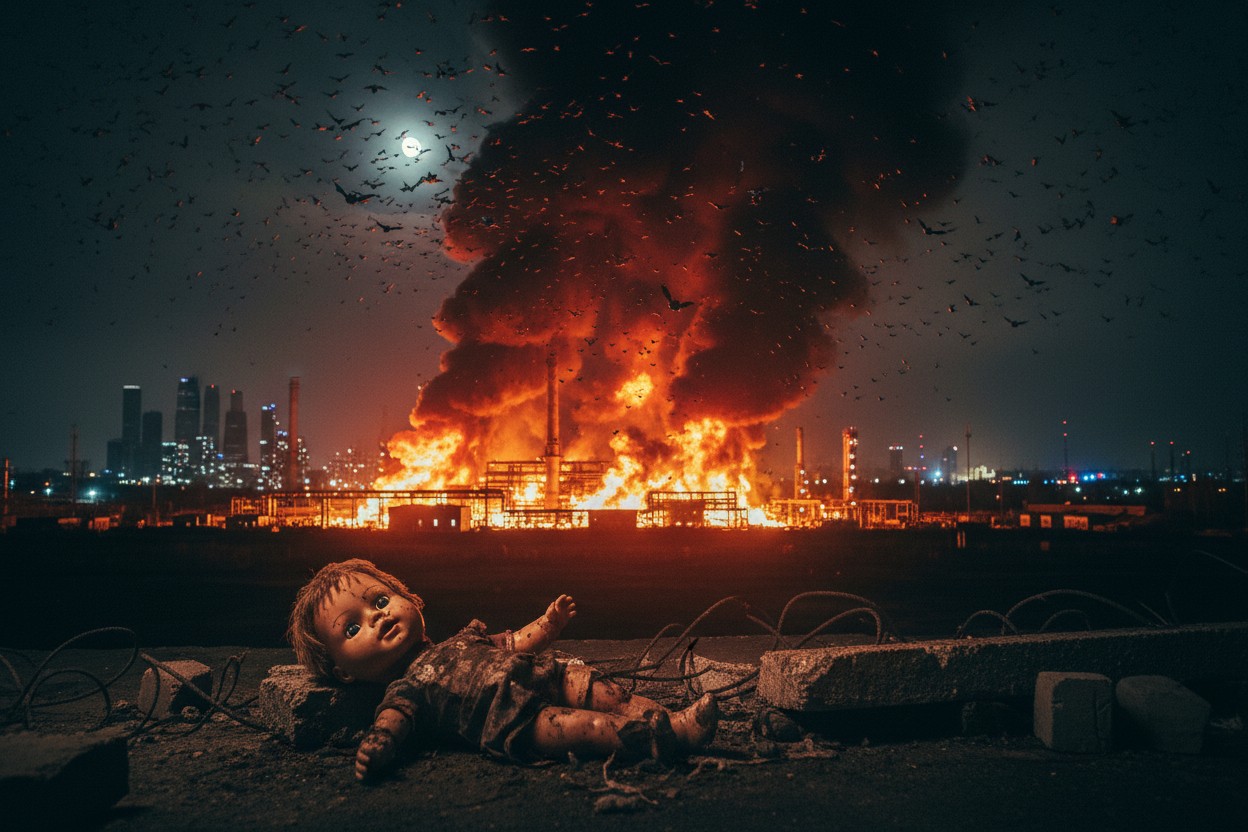
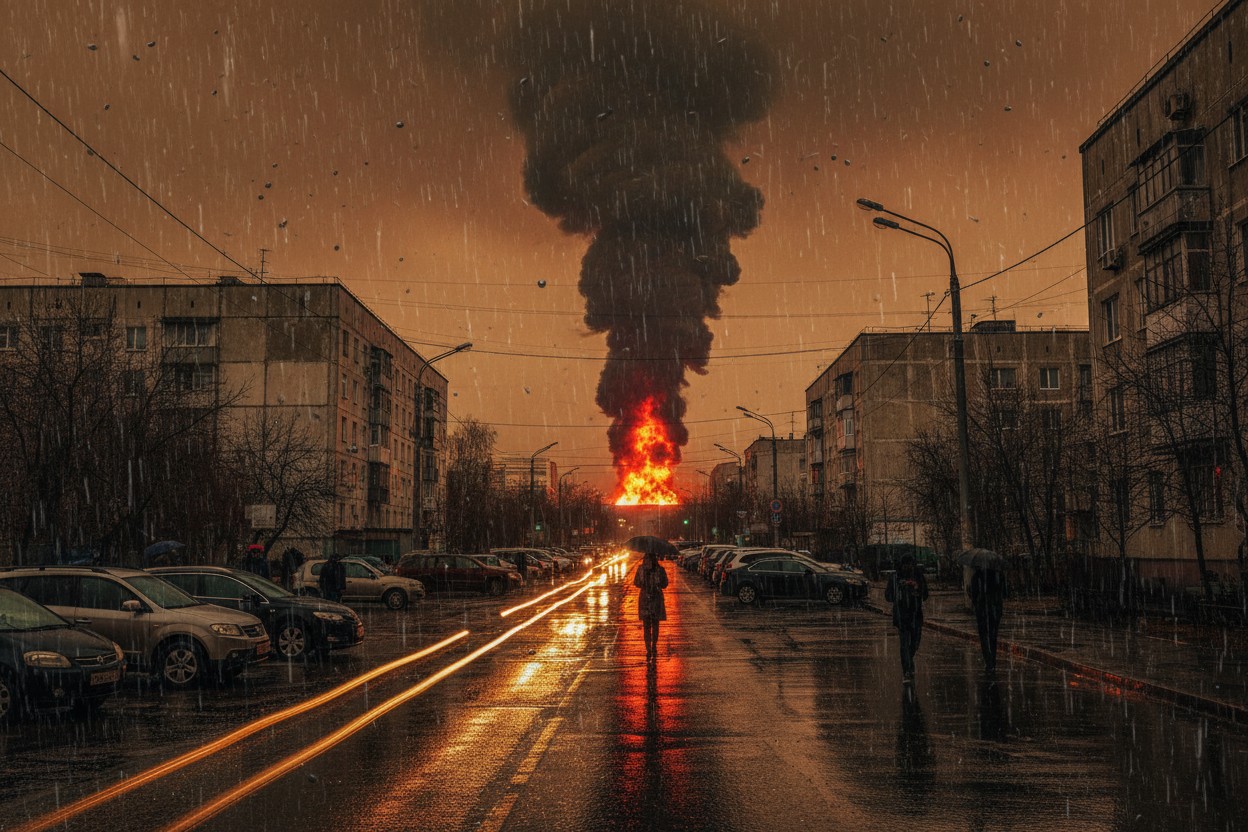
Ukraine launched nearly 200 drones at Moscow on June 18, 2026, in what officials described as the largest aerial assault on the Russian capital since World War II, according to local authorities [1]. The attack killed an eight-year-old girl in the city of Zhukovsky and wounded at least 17 people, including two children, Moscow Region Governor Andrei Vorobyov said [2]. Plumes of black smoke rose over the southeastern Kapotnya district after drones struck the Moscow Oil Refinery, and a nearby shopping mall also caught fire [3][4].
Military analysts interviewed by Russian state media characterized the operation primarily as a public relations exercise with negligible military value. According to reports, the strike was designed to generate headlines and terrorize civilians rather than achieve strategic objectives on the battlefield [5]. The analysts noted that the sheer size of Moscow, comparable to a small country, makes such drone raids militarily insignificant while ensuring they attract international attention.
The Attack and Official Response
Moscow Mayor Sergei Sobyanin confirmed that Russian air defenses destroyed at least 194 unmanned aerial vehicles targeting the capital overnight [6]. The attack forced the temporary closure of all four Moscow international airports and prompted a major emergency response in the Kapotnya district, where the oil refinery sustained multiple hits [1][3]. The Russian Defense Ministry reported that nearly 1,000 drones and four Ukrainian cruise missiles were intercepted and destroyed across the country over 24 hours [7].
Russian officials condemned the strikes as acts of terrorism targeting civilians. Governor Vorobyov stated that the death of the child and the injuries to others demonstrated the indiscriminate nature of the attack [2]. Ukrainian Defense Minister Mikhail Fedorov later published a photo of himself showing the results of the attack to his German counterpart, Boris Pistorius, during a NATO meeting in Brussels [2]. Moscow authorities warned that such operations could escalate the conflict further, as Ukrainian leaders have publicly threatened to intensify long-range strikes deep inside Russia [8].
Analyst Assessments of Military Significance
U.S.-based military analyst Andrei Martyanov told RT that the strike was conducted “for dramatic effect, for the PR action,” and that “the practical outcome of this is negligible” [9]. He argued that drones are not the primary factor in combined-arms operations, which continue to rely on artillery and air power, and that attacks on a city the size of Moscow — comparable to a small country such as Luxembourg — are designed for “shock value” [9]. Another analyst, former U.S. Army officer Stanislav Krapivnik, who is based in the Moscow Region, stated that videos showed drones “flying directly into apartment buildings” and that these were not targeting military sites [9].
The analysts’ assessments align with a broader pattern described by Trendspost: “Ukraine now relies on striking soft targets within Russia to prove to Western governments that it can still hurt Russia” [5]. That observation underscores the propaganda function of such attacks, which do little to alter the frontline situation but generate headlines that may help maintain Western military support. The civilian toll is a consistent outcome, as both sides’ campaigns regularly result in noncombatant casualties [10].
Broader Context and Implications
The June 18 assault was the latest in a series of escalating drone exchanges between Russia and Ukraine. In recent months, Ukraine has struck oil refineries in Volgograd and St. Petersburg, while Russia has retaliated with massive barrages that damaged historic cathedrals and critical infrastructure [11][12][13]. The conflict has entered what analysts describe as an “energy war,” with both sides targeting fuel depots and power plants to degrade each other’s war-fighting capacity [14]. Ukrainian President Volodymyr Zelensky has announced plans to intensify long-range strikes on Russian oil refineries, aided by Western-supplied weapons such as ATACMS missiles [8][15].
The attack also coincided with announcements of further Western military aid. The United Kingdom pledged to deliver 150,000 drones to Ukraine by the end of 2026, a package worth £752 million [16]. Meanwhile, Ukrainian drones have repeatedly strayed into NATO member airspace, causing political crises in countries such as Latvia and leading Swedish Prime Minister Ulf Kristersson to call on NATO to help “direct” Ukrainian drone attacks [17][18]. These developments indicate that the drone campaign is as much about maintaining the flow of Western support as it is about military effects.
Conclusion
The Ukrainian drone strike on Moscow on June 18 achieved limited military objectives but resulted in civilian casualties, including the death of an eight-year-old girl [2]. Analysts concluded that the operation was intended primarily for publicity purposes, designed to demonstrate Kyiv’s capability to strike the Russian capital and to reassure Western backers that Ukraine can still inflict damage far from the front lines [5]. The attack did not alter the tactical situation on the ground, where the war continues to be shaped by artillery, armored engagements, and massed drone salvos. Russia’s retaliatory strikes have already intensified, and the cycle of escalation shows no signs of abating [13][19]. Responses from Ukrainian officials have focused on the attack as a demonstration of strength, without directly addressing the civilian harm. Russian authorities continue to characterize such strikes as terrorist acts [6].
References
- NaturalNews.com. “Ukraine Launches Nearly 200 Drones at Moscow, Striking Oil Refinery in Largest Attack on Russian Capital.” June 19, 2026.
- “Eight-Year-Old Girl Killed in Ukrainian Drone Raid on Moscow – Governor.” June 19, 2026.
- rmx.news. “Moscow Burns After Major Ukrainian Drone Strike Hits Refinery.” June 18, 2026.
- The Epoch Times. “Ukraine Strikes Moscow Oil Refinery in Drone Attack.” June 18, 2026.
- Trends-Journal-2024-05-28.
- “Moscow Targeted in Massive Ukrainian Drone Raid – Mayor.” June 18, 2026.
- BBC News. “Moscow Hit by Largest Ukrainian Attack Since Start of Russia’s Full-Scale War.” June 18, 2026.
- Belle Carter. “Zelensky Threatens to Intensify Long-Range Strikes Deep Inside Russia.” NaturalNews.com. October 29, 2025.
- Mike Adams interview with Andrei Martyanov. June 20, 2024.
- Zoey Sky. “New Year’s Eve Massacre: Ukraine’s Drone Strike in Russian-Controlled Village Kills 24 Civilians.” NaturalNews.com. January 2, 2026.
- Patrick Lewis. “Ukraine Launches Long-Range Drone Strike on Major Russian Oil Refinery in Volgograd.” NaturalNews.com. November 8, 2025.
- Antiwar.com. “Historic Ukrainian Cathedral Damaged During Heavy Russian Bombardment.” June 15, 2026.
- Patrick Lewis. “Russia Escalates Drone War as Ukraine Conflict Spirals into Protracted Bloodshed.” NaturalNews.com. November 28, 2025.
- Patrick Lewis. “Ukrainian Strikes Plunge Western Russia into Darkness as Energy War Intensifies.” NaturalNews.com. January 13, 2026.
- Kevin Hughes. “Ukraine Confirms First Use of U.S.-Supplied ATACMS Missiles Against Russian Territory.” NaturalNews.com. November 23, 2025.
- “UK to Send Ukraine More Drones After Large-Scale Attack on Moscow.” June 19, 2026.
- NaturalNews.com. “Ukraine’s Stray Drones Topple Latvian Government as EU Blames Russia Instead.” June 5, 2026.
- “NATO Should ‘Direct’ Ukrainian Drones Against Russia – Swedish PM.” May 22, 2026.
- Patrick Lewis. “Russia Launches Largest Drone Attack in Retaliation for Ukrainian Strikes on Air Bases.” NaturalNews.com. January 13, 2026.
- Ava Grace. “Trump: Zelensky’s Escalation Justifies Putin Striking Back.” NaturalNews.com. June 11, 2025.
- Trends-Journal-2024-06-04.
Submit a correction >>
Tagged Under:
big government, chaos, civilians, Collapse, conspiracy, drone attack, insanity, Kyiv, national security, panic, PR stunt, Russia, Russia-Ukraine war, sabotage, terrorism, Ukraine, violence, Vladimir Putin, World War III
This article may contain statements that reflect the opinion of the author
RECENT NEWS & ARTICLES